
Root intrusion
Tree Roots in Pipes – No-Dig Pipe Repair Options
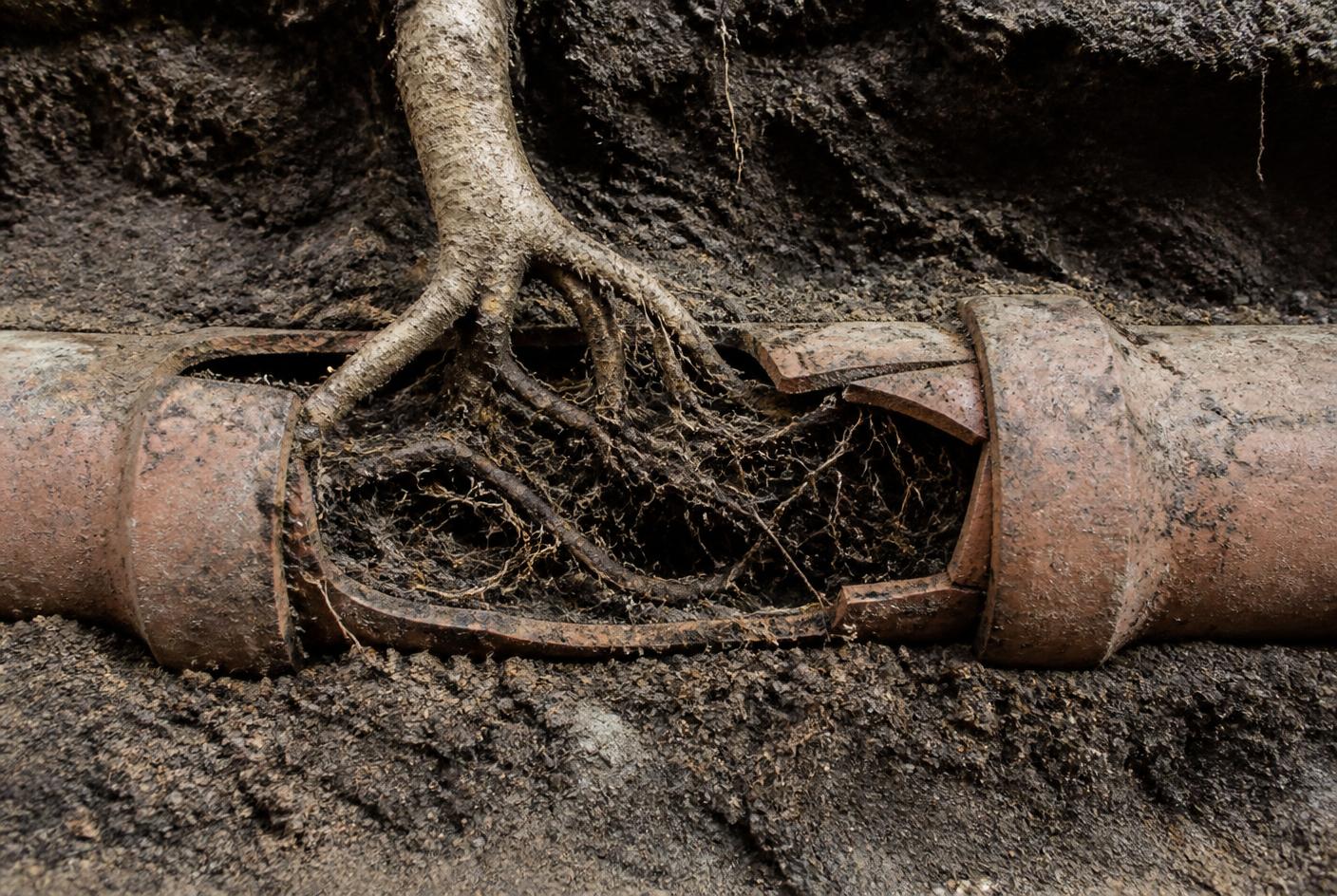
Roots don't break into a sound pipe. They find an opening that's already there — a hairline crack, a shifted joint, a porous section of old clay — and follow the moisture inside. That's why cutting them out clears the drain but doesn't end the problem.
How roots get into a pipe
Sewer and drain lines carry warm, moist, nutrient-rich water. In dry Australian summers that makes them an obvious target for gum, willow, fig, camphor laurel, jacaranda and privet roots, among others. A root tip only needs a gap of a fraction of a millimetre. Once inside, it thickens, widens the opening it came through, and branches into a fine mat that catches everything the drain carries.
The damage compounds. A root that has grown inside a joint acts like a wedge, so each season the opening gets a little larger and the next root has an easier path.
Why drain clearing alone may not solve it
Jetting or a mechanical cutter removes the root mass and restores flow — often within an hour. What it can't do is close the crack or joint the roots used. The pipe is left exactly as damaged as it was, and regrowth typically follows within months, sometimes faster in a wet season. Homeowners who clear the same line every six to twelve months are usually paying for a symptom on repeat.
Root-killing foams and copper sulphate treatments can slow regrowth in some situations, but they don't repair the pipe either.
CCTV diagnosis
A camera inspection is what separates "there are roots in the drain" from a repairable diagnosis: how many entry points, how far along the line, how much of the pipe wall remains, and whether the surrounding sections are still sound. That footage determines whether lining is even an option.
Cleaning and preparation
Before any repair, the roots are cut back to the pipe wall and the line is cleaned so the liner can seat properly. This step is not optional — a liner installed over a root mass will fail.
When relining may be suitable
- The host pipe still holds its shape and has enough remaining wall.
- Entry points are cracks, joints or small holes rather than missing sections.
- The affected length can be reached from an existing access point.
In those cases the cured liner seals the openings across the lined section, which removes the path the roots were using. The mechanism is explained on the pipe relining page, and for waste lines specifically on sewer pipe relining.
When replacement may still be necessary
Where roots have broken the pipe apart, displaced a section sideways or the line has collapsed under the root mass, there may be nothing sound left to line against. Excavating and replacing that section — sometimes followed by lining the remainder — is the realistic answer. See relining vs replacement for how the trade-off is usually weighed, and costs for indicative pricing.
Also worth reading if this has been going on a while: recurring blocked drains.
Get a pipe relining quote
- 1Problem
- 2Inspection
- 3Contact
Your postcode helps us identify specialists servicing your area. We don't need your street address at this step.
Ready to get pipe relining quotes?
Describe the problem, enter your postcode and submit your enquiry. We help match pipe relining enquiries with suitable specialists servicing your area.