
No-dig pipe repair
Pipe Relining – Repairing Pipes From the Inside
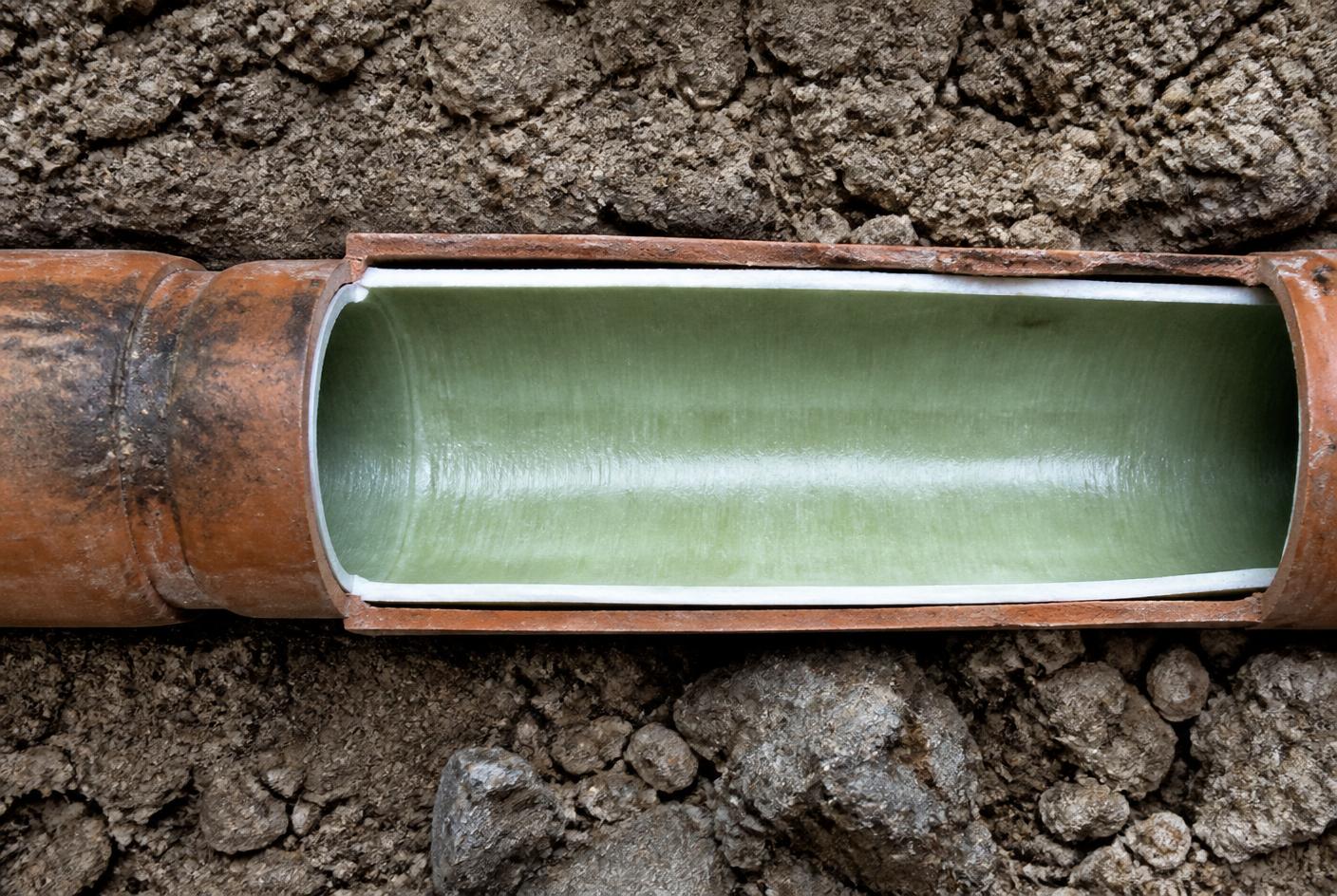
Pipe relining rebuilds a damaged pipe from within, using a resin-saturated liner that cures hard against the existing pipe wall. In suitable cases it avoids digging up driveways, slabs and gardens to reach the fault.
What pipe relining is
Relining — often described as cured-in-place pipe (CIPP) lining — installs a flexible liner through an existing access point, positions it across the damaged section and cures it in place. When the resin hardens, the result is a jointless pipe within the old pipe. Cracks, open joints and root entry points are sealed, and the internal surface is smooth, which helps flow.
Which pipes can potentially be relined
- Residential sewer and sanitary drain lines, including older clay and earthenware pipes.
- Stormwater lines and downpipe connections.
- Pipes running under driveways, garages, slabs, paving, pools and established gardens.
- Sections damaged by root intrusion, cracking, corrosion or joint displacement.
Suitability isn't universal. Pipes that have collapsed, badly deformed, severely sagged (bellied) or lost too much of their wall may not hold a liner. That's a judgement a specialist makes from the camera footage, not something that can be decided from a description over the phone.
The process, step by step
1. CCTV diagnosis
A camera is run through the line to identify the fault, its distance from the access point and the length affected. This is also where junctions are located. Read more about what repeated drain blockages can indicate.
2. Cleaning and preparation
Roots, scale, grease and debris are cut out — commonly with high-pressure water jetting and mechanical cutters — so the liner can sit against a clean host pipe.
3. Liner installation
A liner impregnated with resin is inverted or pulled into position and inflated so it presses against the pipe wall across the damaged section.
4. Curing
The resin cures — ambient, hot water, steam or UV, depending on the system. Curing time varies with the product, diameter and conditions.
5. Junction reinstatement and post-install CCTV
Any branch connections covered by the liner are reopened, then a second camera run records the finished result. Ask for that footage as part of handover.
Benefits
- Little or no excavation in suitable cases, so surfaces above the pipe are usually preserved.
- Root entry points are sealed rather than repeatedly cleared.
- Shorter time on site than open-trench replacement for comparable lengths.
- No reinstatement bill for concrete, paving or landscaping that was never removed.
Limitations to be aware of
- A liner slightly reduces internal diameter — usually minor, but relevant in small pipes.
- Collapsed or badly deformed sections generally need excavation first, or instead.
- Severe sags aren't corrected by lining; the fall problem remains.
- Poor preparation is the common cause of poor results, so cleaning matters.
Approximate costs
As general orientation, relining commonly runs around A$500–800 per metre, with many residential projects falling roughly between A$3,000 and A$10,000. Access, length, diameter and the number of junctions all move the number. The full breakdown is on our pipe relining cost guide.
Related reading
- Sewer pipe relining for residential sewer lines and joint failures.
- Drain relining for broken and repeatedly blocked drains.
- Repairing tree-damaged pipes.
- Pipe relining vs replacement — an honest comparison.
Get a pipe relining quote
- 1Problem
- 2Inspection
- 3Contact
Your postcode helps us identify specialists servicing your area. We don't need your street address at this step.
Ready to get pipe relining quotes?
Describe the problem, enter your postcode and submit your enquiry. We help match pipe relining enquiries with suitable specialists servicing your area.